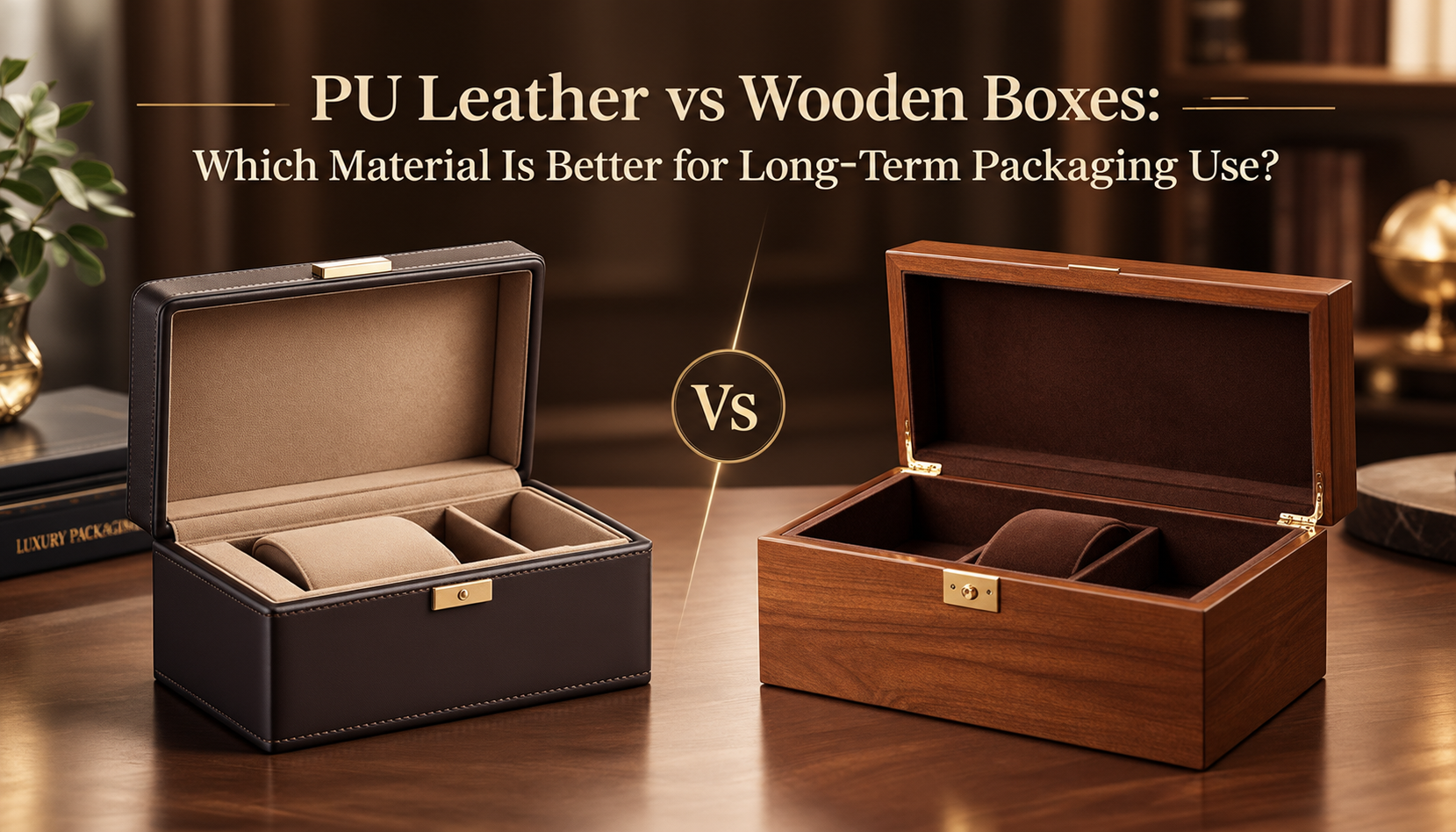
They offer very different aesthetics and performance characteristics. There is no universally better material. The right choice depends on the product, usage scenario, brand positioning, and expected service life.
What Is a PU Leather Packaging Box?
PU leather is a polyurethane-based synthetic leather that is typically wrapped around an MDF or rigid paperboard base. It is designed to recreate the smooth and refined feel of genuine leather.
PU leather is available in a wide range of colors, textures, and finishes. It creates a sophisticated and fashionable appearance and is widely used for jewelry boxes, watch boxes, perfume gift boxes,and other luxury presentation packaging.
It is particularly suitable for brands that value a soft tactile experience, rich color options, and a refined leather-like appearance.
What Is a Wooden Packaging Box?
A wooden packaging box does not necessarily mean a solid wood box. Common options include painted MDF boxes, MDF boxes with natural wood veneer, and solid wood boxes.
Depending on the budget, design requirements, and desired appearance, different wood-based materials can be selected.
With professional painting, wood veneer, and other surface-finishing techniques, wooden packaging can combine structural strength with a premium appearance.
In particular, matte-finished wooden boxes are well suited to long-term desktop display, frequent handling, and routine cleaning.
PU Leather vs Wooden Boxes for Long-Term Use
1. Protection: Flexible Wrapping vs. Rigid Support
PU leather boxes are generally lightweight and flexible. When properly structured and reinforced, they can provide good wrapping and cushioning for the packaged product.
Some PU leather materials also offer a certain level of moisture resistance, making them suitable for applications where lightweight construction and a soft tactile experience are important.
Wooden boxes rely on a rigid outer structure to provide stronger external support. Combined with foam inserts, cushioning, and compartments, they can help protect products from impact and movement during transportation.
This makes wooden boxes particularly suitable for glassware, electronics, collectibles, fragile products, and relatively heavy items.
In simple terms:
- PU leather is a good option when lightweight construction, flexibility, and tactile appeal are priorities.
- Wooden packaging is often better suited to applications requiring rigid structural support and stronger external protection.
2. Durability: Good for Display, Wood Often Better for Frequent Use
For low-frequency display or one-time gifting, PU leather boxes can offer an excellent combination of appearance and tactile appeal.However, when a box needs to be opened frequently, handled by multiple people, touched repeatedly, or displayed for a long period, the long-term stability of the outer surface becomes more important.
With prolonged friction, frequent contact, humidity, or improper maintenance, some PU leather surfaces may develop scratches, cracking, or peeling. Actual service life depends on the
quality of the PU material, the environment, frequency of use, and maintenance conditions.
Wooden boxes do not have a synthetic leather outer layer, so they do not face the same risk of PU surface peeling. Properly manufactured painted MDF, natural wood veneer, or solid wood boxes can provide stable surface performance and maintain their appearance well under repeated handling and long-term display.
Of course, durability is not determined by the material alone. Box structure, material quality, surface finish, manufacturing process, and overall workmanship all influence the final service life of the packaging.
3. Cleaning and Maintenance: Look at the Surface Finish, Not Just the Base Material
For packaging designed for long-term use, cleaning and maintenance should not be overlooked.PU leather surfaces can generally be wiped clean, but their resistance to alcohol, disinfectants, and cleaning products varies depending on the specific PU material and surface treatment.
Frequent use of strong cleaning agents may accelerate surface aging or color fading. Therefore, for packaging used in high-frequency cleaning environments, the chemical resistance
of the specific PU material should be confirmed in advance. Wooden boxes finished with suitable paint or natural wood veneer can also support routine dusting
and wiping.A matte-painted wooden box can be particularly practical for desktop or countertop display because fingerprints and minor signs of daily use may be less visually noticeable.
Packaging selection tip: If the box will be cleaned frequently, compare the specific surface finish and its cleaning resistance rather than simply comparing PU leather with wood.
4. Sustainability: Evaluate the Entire Life Cycle
Environmental performance should not be judged solely by the name of a material. PU leather packaging can be made with eco-conscious or recycled material options, depending on the supplier and material specification.
Wood is a natural material, and brands can consider legally sourced or responsibly managed wood, including certified materials where appropriate. A well-made wooden box can also be reused for a long period, extending the overall life cycle of the packaging.
For brands that prioritize natural materials, long-term reuse, and responsible sourcing, compliant wood materials can be an attractive option. For brands that prioritize lightweight construction, rich colors, and flexible surface design, PU leather made to appropriate environmental and compliance standards can also be considered.
The most meaningful sustainability assessment should consider material sourcing, manufacturing, service life, reuse, and end-of-life options together.
PU Leather vs. MDF vs. Solid Wood: Quick Material Guide
Different packaging materials offer different advantages:
| Material | Key Characteristics | Suitable Applications |
|---|---|---|
| PU Leather | Soft tactile feel, rich colors and textures | Fashion-oriented and luxury presentation boxes |
| Painted MDF | Smooth surface, consistent color, highly compatible with finishing techniques | Jewelry, perfume, and high-end gift boxes |
| Natural Wood Veneer | Natural wood grain and warm appearance | Premium packaging with a natural aesthetic |
| Solid Wood | Strong structure and authentic natural texture | Collectible boxes and reusable premium gift boxes |
There is no single material that is best for every packaging project.
PU leather is suitable for brands looking for a soft tactile experience,rich colors, and a fashionable appearance.
Natural wood veneer and solid wood are suitable for brands seeking a natural aesthetic and stable long-term performance.
Painted MDF is a highly versatile option when brands require a smooth, consistent, and customizable surface.
Which Packaging Material Is Best for Different Applications?
1. Frequent Opening and Repeated Use
For packaging that will be opened and reused frequently, painted MDF, natural wood veneer, or solid wood can be considered, especially when surface durability and structural stability are priorities.
2. Long-Term Desktop or Countertop Display
For packaging intended to remain on a desk, shelf, or countertop for an extended period, matte-painted MDF or wooden boxes can provide a stable and refined appearance while making everyday fingerprints and minor marks less noticeable.
3. Fragile or Heavy Products
For fragile or relatively heavy products, a rigid wooden box combined with an appropriate protective insert can provide strong structural support during handling and transportation.
4. Lightweight Packaging with a Leather-Like Tactile Feel
When lightweight construction, soft touch, and a leather-like appearance are important, PU leather boxes can be an effective choice, particularly for one-time gifting or lower-frequency display applications.
How to Choose the Right Material for Custom Luxury Packaging
Before selecting a packaging material, brands should consider the following questions:
- What is the size, weight, and fragility of the product?
- How long is the packaging expected to be used? Is it designed for one-time gifting or long-term reuse?
- How frequently will the box be opened and handled?
- Will the box need regular cleaning? What type of cleaning products will be used?
- What image should the packaging communicate? Soft and fashionable, or classic and substantial?
- Are there sustainability, responsible sourcing, or environmental compliance requirements?
A successful luxury packaging solution should consider the material, structure, surface finish, interior, and hardware as one integrated system, rather than selecting the outer material in isolation.
PU Leather or Wooden Boxes: Which One Should You Choose?
PU leather boxes have clear advantages in terms of lightweight construction, flexibility, leather-like tactile appeal, and a wide variety of colors and textures. They are well suited to fashionable presentation packaging and applications where tactile experience is important.
Wooden boxes, including solid wood and wood-veneered MDF, offer advantages in structural strength, surface stability, and long-term reuse. They are particularly suitable for frequent handling, long-term display, and products that require rigid protection.
Therefore, the question is not simply whether PU leather or wood is better.
The right material should be selected based on:
Product → Usage Frequency → Service Life → Cleaning Requirements →Brand Positioning → Sustainability Requirements
Good luxury packaging should not only look premium when it leaves the factory. It should also stand up to long-term use.
Conclusion
PU leather and wooden boxes each have their own advantages. PU leather offers lightweight construction, flexibility, a soft tactile feel, and a wide range of colors and textures. Wooden packaging provides rigid structural support, stable surface performance, and strong potential for long-term reuse.
For packaging that requires frequent handling, long-term display, repeated cleaning, or rigid product protection, painted MDF, natural wood veneer, and solid wood are worth considering.
Ultimately, the best packaging material depends on the product, usage environment, expected service life, brand positioning, and specific performance requirements.
The best luxury packaging is not simply packaging that looks premium when new; it is packaging designed to maintain its value and appearance throughout its intended life.
FAQ
Is a PU leather box suitable for long-term use?
Yes. A PU leather box can be used for a long period, but its service life depends on the quality of the PU material, humidity, frequency of opening and handling, and maintenance conditions.For high-frequency use, it is important to evaluate the material’s resistance to wear and aging.
Are wooden boxes more durable than PU leather boxes?
Wooden boxes do not have a synthetic leather surface, so they do not have the same risk of PU peeling. They can offer better long-term stability in frequent-use and reusable applications.However, actual durability still depends on the substrate, structure, surface finish, manufacturing process, and workmanship.
Are wooden boxes easy to clean?
Wooden boxes with appropriate surface treatments can generally be cleaned by routine wiping and dusting. For high-frequency cleaning applications, the specific paint, coating, or wood veneer
finish should be selected according to the cleaning method and environment.
Is MDF suitable for luxury gift boxes?
Yes. MDF provides a smooth and stable surface and is compatible with a wide range of decorative techniques, including hot stamping, silk screening, UV printing, and other surface finishes. It is widely used for luxury jewelry boxes, perfume boxes, gift boxes, and other premium packaging applications.
Which is more environmentally friendly: PU leather or wood?
Neither material should be judged solely by its name. A more complete assessment should consider raw material sourcing, manufacturing processes, service life, reusability, and end-of-life options. Brands seeking natural materials and long-term reuse may consider responsibly sourced or certified wood, while brands requiring a wider range of colors and textures can consider PU materials that meet appropriate environmental and compliance standards.