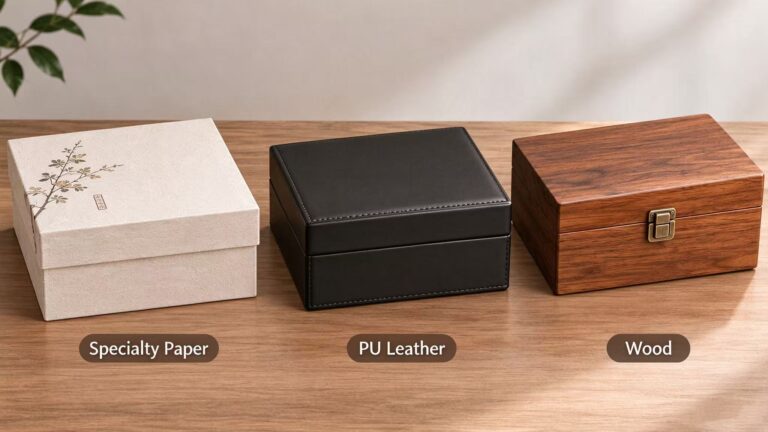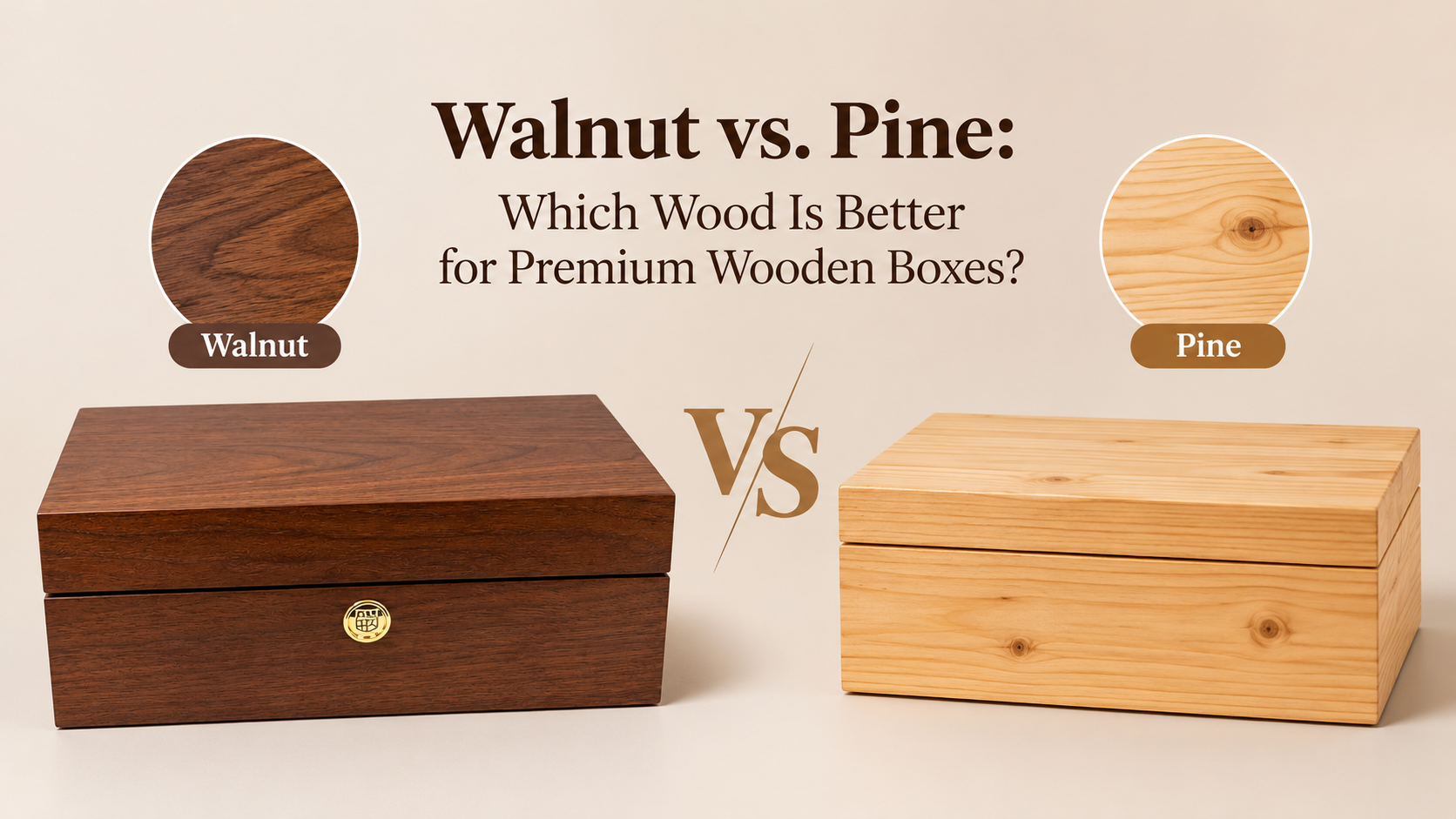
The short answer: walnut is valued for its rich appearance, greater hardness, and premium appeal. Pine is known for being lightweight and affordable.
But which one is better for wooden boxes? The answer depends on your product positioning, budget, and expectations for long-term quality. Let’s take a closer look at their differences.
The Quick Comparison
| Comparison | Walnut Wood | Pine Wood |
|---|---|---|
| Hardness | Higher | Lower |
| Weight | Medium to relatively heavy | Lightweight |
| Color | Rich brown tones | Pale yellow to light brown |
| Grain | Distinctive and elegant | Simple and relatively straight |
| Durability | Generally more resistant to dents and scratches | More easily damaged by impact |
| Cost | Higher | Lower |
| Typical Applications | Premium gift boxes, jewelry boxes, watch boxes | Budget-friendly packaging and general wooden products |

Walnut vs. Pine: Differences in Durability, Appearance, and Cost
Durability
Walnut is a premium hardwood known for its rich brown color, distinctive grain patterns, and relatively high hardness. It is widely used in high-quality furniture, decorative products, and luxury packaging. Compared with common softwoods, walnut offers better resistance to everyday scratches, dents, and surface damage, making it a suitable choice for wooden boxes designed for long-term use.
Pine, on the other hand, is a lightweight softwood with a pale yellow or light brown appearance. It is relatively easy to cut, shape, and process, which makes it an economical option for general-purpose wooden products. However, its softer surface is more susceptible to scratches, dents, and compression marks, especially when the box is frequently handled.
According to the Janka hardness data, American black walnut has a hardness rating of approximately 1,010 lbf, while common pine species generally range from around 380 to 690 lbf. Actual values vary depending on the wood species.
This difference helps explain why walnut generally performs better when surface resistance and long-term appearance are important considerations.
Appearance
Walnut naturally creates a warm, elegant, and sophisticated impression. Its deep brown tones and flowing grain patterns give each box a distinctive appearance. With a suitable clear finish, the natural beauty of the wood becomes even more noticeable without requiring extensive staining.
Pine offers a different visual style. Its lighter color, relatively simple grain, and occasional visible knots make it suitable for rustic, casual, or minimalist designs. Although painting and staining can improve its appearance, pine generally does not provide the same naturally luxurious look as walnut.
For example, imagine opening a beautifully finished walnut watch box. The rich wood grain, smooth surface, and warm color immediately communicate quality before the customer even sees the watch inside. This is one reason walnut is often preferred for luxury gift boxes, jewelry boxes, and collectible storage boxes.
Cost
Price is another major difference between these two materials. Pine is generally more affordable because it is widely available, grows relatively quickly, and is easier to source in large quantities. It is a practical choice for projects where budget control and lightweight construction are priorities.
Walnut is considerably more expensive due to its slower growth, material availability, and desirable natural appearance. Selecting high-quality walnut boards with consistent grain and color can further increase manufacturing costs.
However, the lowest material cost does not always mean the best overall value. For premium wooden boxes designed to represent a high-end brand, investing in walnut can enhance the perceived value of the product and create a more memorable unboxing experience.
So Which Wood Should You Choose?
Choose Walnut If:
- You are developing premium or luxury packaging.
- You want a naturally rich color and distinctive wood grain.
- Your wooden box needs better resistance to everyday scratches and dents.
- You are manufacturing jewelry boxes, watch boxes, collectible boxes, or high-end gift packaging.
- Product presentation and long-term appearance are important to your brand.

Choose Pine If:
- Your project has a limited material budget.
- You prefer a lightweight wooden structure.
- The box is intended for general-purpose or short-term use.
- You prefer a light-colored or rustic design.
- Cost efficiency is more important than premium appearance.

Final Thoughts
Wood species isn’t just a material spec — it’s the single biggest factor in how a piece of Wooden Boxes looks, feels, and holds up. Walnut and pine each have their place. But if you’re investing in Wooden Boxes that matters to you, a real hardwood slab is worth it.
If you are planning a custom wooden box project, our team can help you evaluate different materials, finishes, structures, and interior designs to find a suitable solution for your product.
Looking for a reliable custom wooden box manufacturer? Contact Dianya Packaging to discuss your project.