A luxury look is easy to admire. It is much harder to produce.
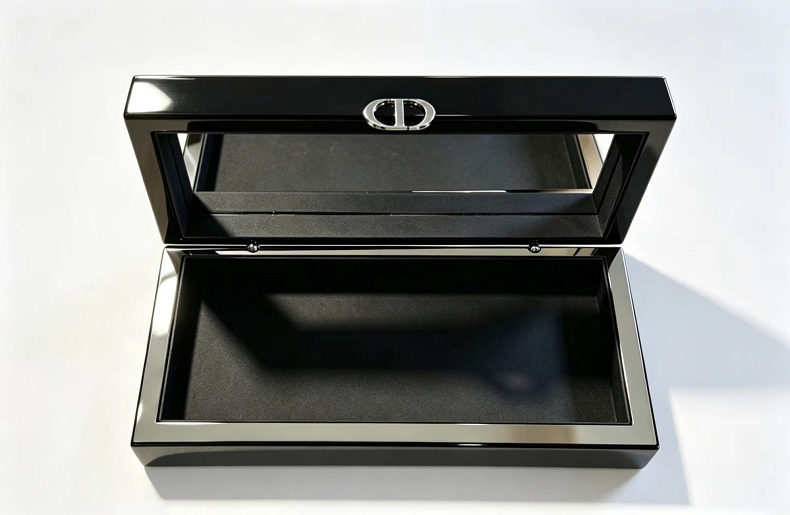
Manufacturing a luxury wooden box with mirror-finish stainless steel is difficult because every component must match with extreme precision. The wood, metal hardware, and cylinder hinges must align perfectly to create a seamless appearance and durable structure.
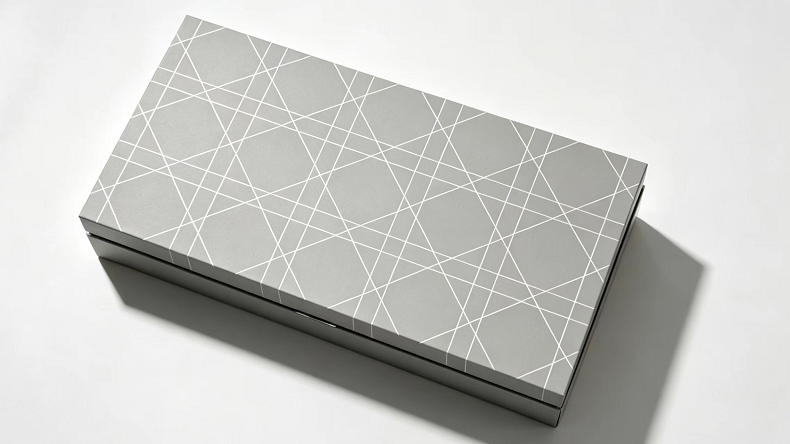
Many buyers see a finished luxury box and focus on its elegant appearance. They notice the glossy surface, the mirror-like reflection, and the refined details. Few people see the manufacturing challenges behind the product. In my work at DY Packaging, I often explain that the visual effect is only the final result. The real challenge lies in the precision hidden beneath the surface.
Why is it hard to match the stainless steel and wooden box?
A tiny mismatch can ruin a luxury appearance.
Matching mirror-finish stainless steel to a wooden box is difficult because stainless steel remains dimensionally stable while wood always has manufacturing tolerances. Both materials must meet perfectly to achieve a flush surface.
The Challenge of Different Materials
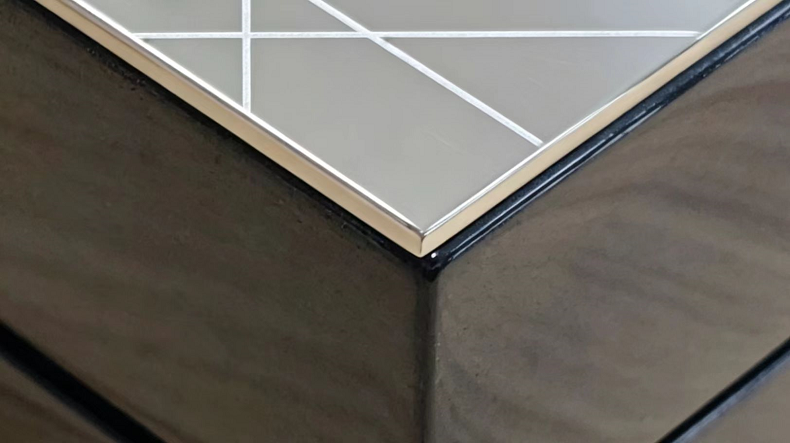
Stainless steel with a shiny mirror surface looks really nice. Making the mirror finish and laser line patterns isn’t hard at all. The tricky part is attaching this stainless steel sheet onto the wood box.
Stainless steel parts are rigid. Their dimensions remain highly consistent. Wood behaves differently. Wood components always contain small tolerances. Even a tiny difference will leave an obvious uneven edge where the metal meets the wood case.
Why Precision Matters
When a customer touches the edge of a luxury box, the surface should feel completely smooth. The hand should not detect any protrusion or depression. To achieve this effect, every wooden component must be manufactured with exceptional accuracy.
Therefore, the quality of the woodworking equipment and the skill of the craftsman play a major role. A luxury appearance depends on both.
How to ensure the firm bonding of metal hardware?
Beautiful hardware means little if it becomes loose.
Firm metal hardware bonding requires both adhesive and mechanical fixing. Using glue alone may not provide sufficient long-term security because the contact area is often limited.
Why Glue Alone Is Not Always Enough
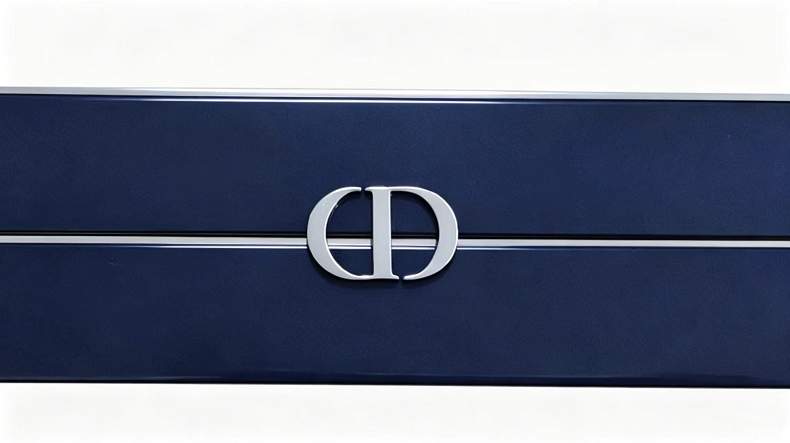
Many decorative metal plates have a small contact surface. A small bonding area limits the effectiveness of adhesive. If workers apply too much glue, excess adhesive may squeeze out and affect the appearance. If workers apply too little glue, the connection may weaken over time.
Modern industrial adhesives are strong. A properly selected adhesive can provide reliable performance. Still, luxury packaging often requires a higher safety margin.
The Double-Security Method
At DYPackaging, we often use a dual-fixation approach. The rear side of the metal plate contains fixing pins. Workers insert these pins into the wooden surface before applying adhesive. This method creates both mechanical and chemical bonding.
I often describe this method as a double-insurance solution. The adhesive provides strong bonding. The fixing pins add extra security. This combination helps prevent movement, detachment, and long-term durability issues. For premium packaging, this extra effort is worthwhile.
What makes the assembly of cylinder hinges so demanding?
A small error can stop the entire box from working.
Cylinder hinge installation is demanding because multiple holes in wood and metal parts must align perfectly. Even slight misalignment can prevent proper assembly and affect the final appearance.
Several Alignment Points Must Match
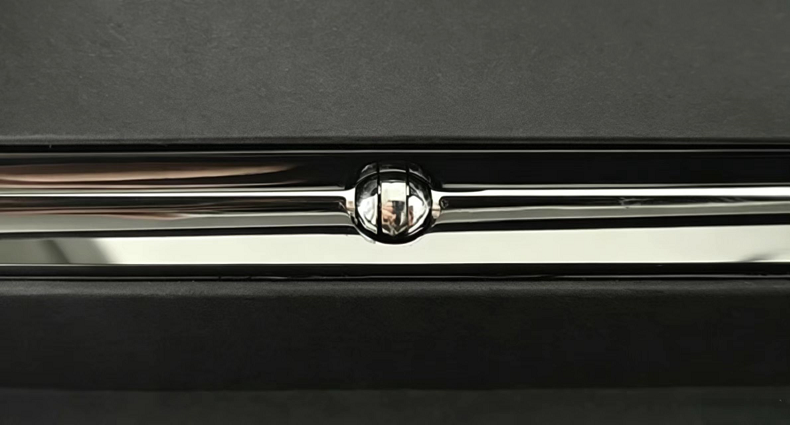
The cylinder hinge may appear simple from the outside. The reality is very different. The hinge connects metal components and wooden components. Every hole must share the same centerline. The upper lid contains hinge holes. The bottom box contains hinge holes. The stainless steel part also contain matching holes. All these elements must align precisely during assembly.
Why Tiny Errors Matter
A cylinder hinge offers almost no room for adjustment. Even a tiny size error causes assembly trouble. Workers might fail to fit the hinge into place, leaving the box lid unable to shut tightly. The lid will also open and close with a jerky, scratchy feel, plus ugly gaps will show up on the finished product.
I really like how neat a well-mounted cylinder hinge looks. The hinge, metal trim and wood fit together with barely any noticeable gaps. To pull this off, we need experienced workers, precise machines and tight quality checks. It gets far harder to produce large batches when every single box has to hit this same high standard.
On this box, I find that customers initially focus on the mirror stainless steel surface. After I explain the production process, they often realize that the hidden engineering is actually the most impressive part. Luxury packaging is not only about decoration. It is about precision at every stage.
Conclusion
Luxury wooden boxes succeed when precision, craftsmanship, and engineering work together perfectly.