Even the tiniest crack can ruin years of careful cigar aging.
When it comes to cigar boxes, a tight seal is absolutely critical. The smallest gap will let moisture escape and rob cigars of their natural aroma, which ruins long-term storage for premium sticks.
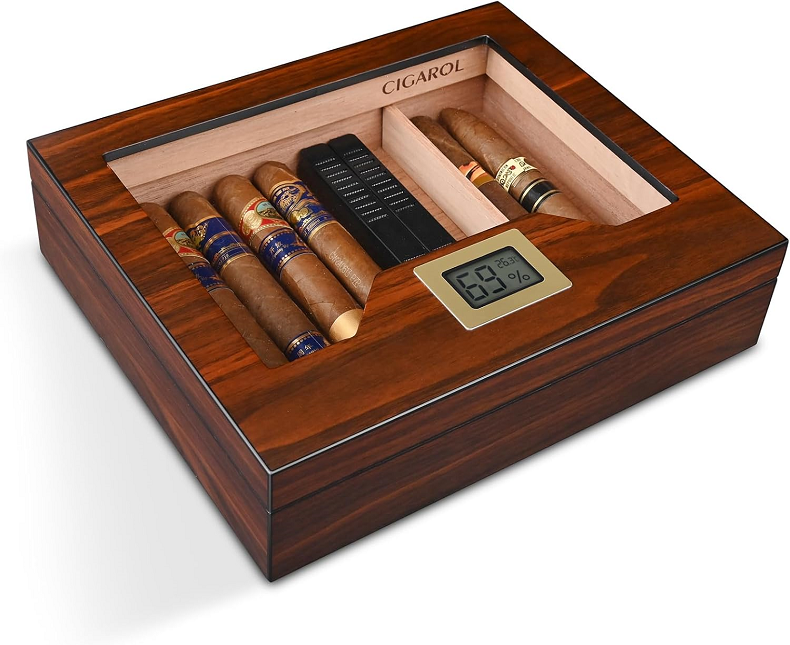
Seasoned cigar collectors always check the seal first. A cigar box is not like a jewelry box or a gift box. Minor gaps may not matter on other products, but they make a huge difference for cigar storage. No matter how beautiful a box is, it’s not fully functional if it can’t seal properly.
The Relationship Between Humidity Control and Seal Integrity
A solid airtight seal keeps humidity steady inside the box. Consistent moisture levels protect a cigar’s flavor, scent, texture and allow it to age perfectly.

Why Humidity Stability Matters
At Dianya, we specialize in high-end custom wooden boxes, and we always tell our clients: a cigar box is essentially a mini climate-controlled space. Cigars hold natural oils and aromatic compounds that create the unique taste and smell enthusiasts love.
If air leaks out and humidity drops, cigars will dry out. Frequent humidity swings make cigars expand and shrink repeatedly. Over time, this affects the wrapper, flavor balance, and aging quality.
Many premium cigar boxes use Spanish cedar linings because cedar helps regulate moisture. However, cedar can only do so much. Even the best cedar cannot compensate for a poorly sealed box. The material and the construction must work together.
People who invest in fine cigars always understand this right away. They know good storage is not just about keeping cigars safe; it’s about preserving their value too.
Why Even Tiny Gaps Can Damage Cigar Storage?
Even a tiny gap allows air exchange. Air exchange slowly removes humidity and aroma from the box, reducing cigar quality over time.
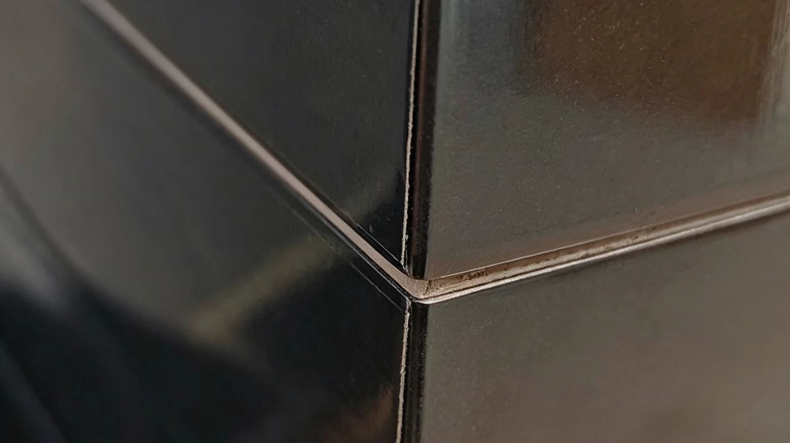
Small Gaps Create Big Problems
This is one of the most misunderstood issues in cigar box manufacturing. Customers sometimes see a gap that looks almost invisible and wonder if it really matters. For a jewelry box, the answer may be no. For a cigar box, the answer is absolutely yes.
Those natural oils and scents inside cigars fade little by little when air escapes. The change happens slowly, but it never stops. Think of it like a perfume bottle: a loose cap lets the fragrance fade over time, and the same logic applies here to cigars.
Our company inspects every seam closely when we test box samples. We never accept even faint gaps, because we know both collectors and cigars will be affected. This requirement is one reason why premium cigar boxes cost more than ordinary wooden boxes. The tolerance level is much stricter, and the production process is far more demanding.
Why Warping Is the Invisible Enemy of Cigar Box Sealing?
Most sealing failures start long before assembly.
Solid wood is prone to warping problems. Once the box loses its shape, gaps appear and seal integrity is lost.
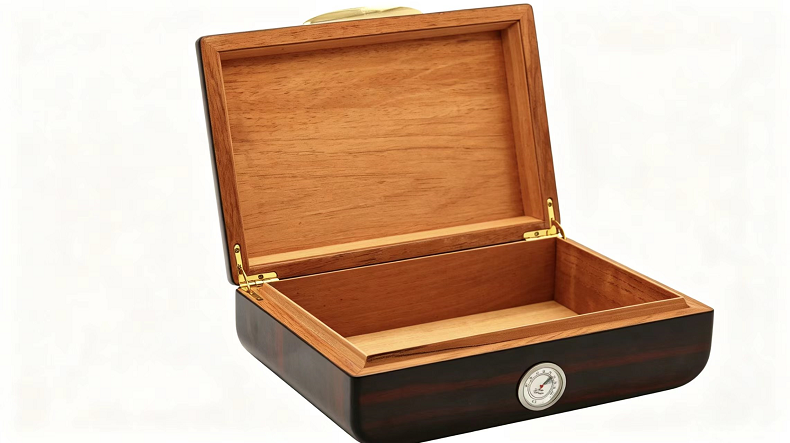
Material Control Is the Foundation
Most people believe tight sealing relies just on hinges, magnets or workmanship. Actually, it all begins with controlling wood moisture, which should be maintained 14–15%. For high-end cigar boxes, we strictly check wood moisture before cutting and assembly. Wood with excess moisture often causes issues after painting.
Cigar boxes present a unique challenge. Unlike many other luxury boxes, the sealing surfaces inside a cigar box are often not painted. One side receives lacquer, while another side remains unfinished. This creates unequal tension inside the wood structure. If the wood moisture is unstable, the box begins to pull in one direction. The result is warping.
I’ve seen boxes look great right after shaping. But if they sit too long before priming, the surrounding air changes the wood. By the time work continues, warping has already happened, and the box can no longer seal well.
This is why premium cigar box production requires continuous workflow control. Each process must follow the previous one closely.
Why High-End Manufacturers Cut the Box After Finishing
One advanced technique used for high-end cigar boxes is to separate the lid from the base after all finishing work is done. Most wooden boxes are cut and split into lid and base first, then painted and polished. High-end cigar boxes often use a different process. The entire box remains intact through painting, polishing, hardware installation, and piano lacquer finishing. Only after all surface work is completed does the box return to the woodworking department for final separation.
This process greatly reduces warping and keeps the lid and base perfectly aligned. Yet it is extremely difficult.
Piano lacquer is thick and hard. During cutting, the saw blade must be precise. One small mistake causes chipped edges, or “paint breakout”, which ruins both the appearance and the seal.
Many factories avoid this process because the cost is much higher. Yet for luxury cigar boxes, this extra effort often produces the best sealing results.
Conclusion
For a cigar box, a reliable seal is not an extra feature but the core value. A good seal keeps humidity stable, locks in natural aromas, and lets cigars age as they should. A trulyexcellent cigar box not only requires exquisite craftsmanship in appearance but must also achieve nearly invisible seams. Because for cigars, even the smallest gap can mark the beginning of quality loss.